


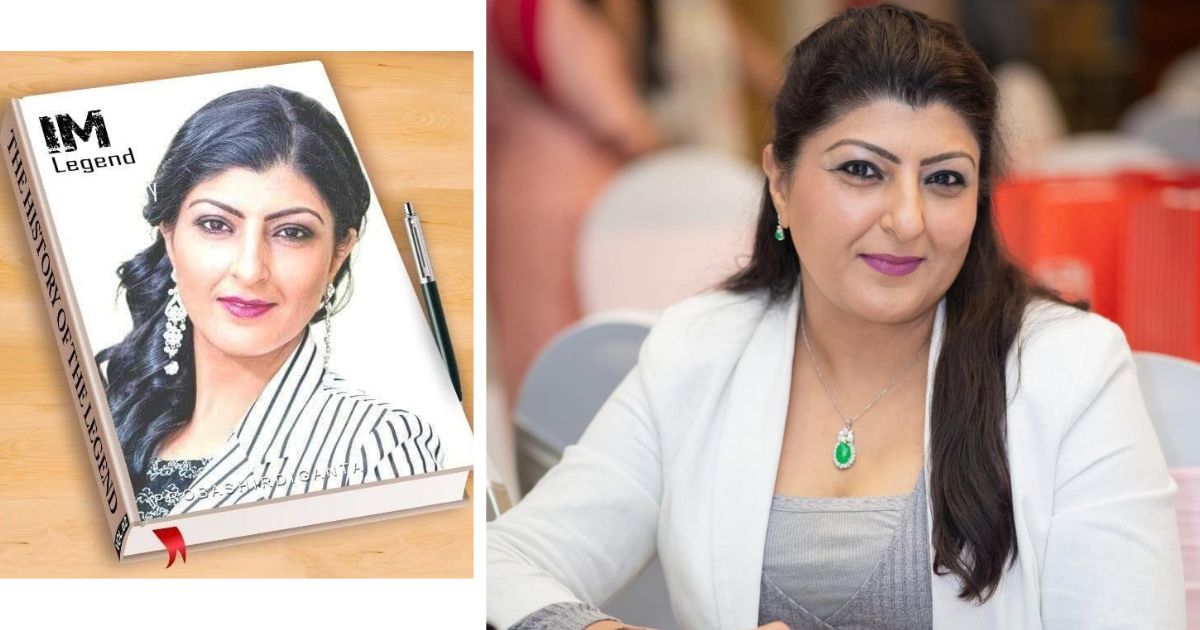
After 21 years in Australia, Dr Sonia Singh returned to India and discovered a deeper purpose within life’s uncertainty.
For most of her life, Dr Sonia Singh has had a plan. If Plan A faltered, there was always a Plan B, C or D waiting in the wings. Yet today, after more than two decades in Australia, she finds herself back in Ambala, Haryana, living through what she calls “entropy”, a season of uncertainty she is no longer trying to control.
“For the first time in my whole life, I haven’t got a plan,” she says. “I’m enjoying that randomness and allowing divine energy to guide me towards what comes next.”
Singh’s return to India was shaped not by professional ambition but by profound personal loss. The passing of her father last year forced her to reconsider distance, duty and the finite nature of time. Unable to leave her mother grieving without her, she packed her bags and came home.
“Her wishes became my command,” she says. “Right now, I am working here and taking care of my mother. That is my priority.”
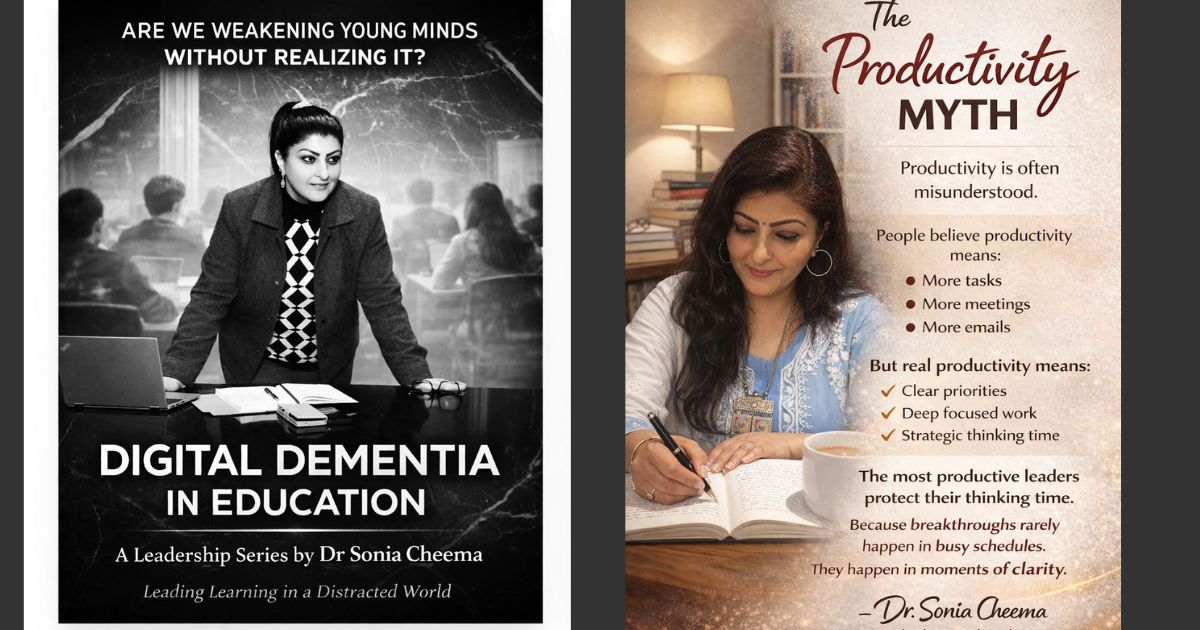
Australia, however, remains home too. “Some people are fortunate enough to have two homes, and I am one of them,” she says.
Her relationship with Australia began 21 years ago, when she arrived alone to study a Master of Education at La Trobe University. She knew no one. Behind the academic ambition was a more personal search: she was trying to understand who she was.
The move was both thrilling and terrifying. Financial hardship, difficult living arrangements and demanding decisions tested her, but also revealed her strength.
“I never knew I was that brave,” she reflects. “There were times when I broke down and lost confidence, but somewhere in my heart and mind was a voice saying, ‘You can do it. Find a way.’”
That belief became what she calls the “golden key” of her life: there is always a solution, even if it has not yet been found.
An educator and lecturer by background, Singh built a career in educational leadership and completed a doctorate examining Indian and Australian curricula. She coached leaders, moved into business and life coaching, served community organisations and became first runner-up at Miss India Melbourne.
But her most important transformations happened away from titles and stages.
After a serious scooter accident damaged her physical confidence, Singh developed a fear of returning to the road on two wheels. Years later, buying a motorbike in Australia became an act of reclamation. She still remembers riding to IKEA in Richmond and feeling something shift within her.
“I had got myself back,” she says.
The accident also awakened her spiritually. Before it, she describes herself as mechanical, even robotic. Afterwards, faith became less about ritual and more about connection, energy and presence.
Her Australian years also brought painful lessons. Her divorce in 2012 was one of the lowest periods of her life. While her public world appeared to be expanding, her private world was breaking apart.
“Letting go of the life I had always imagined broke me emotionally, bit by bit,” she says.
Time did not erase the experience, but it changed how she carried it. She no longer feels compelled to resolve every conflict immediately, keep life “crease-free” or prove herself. Sometimes, emotions need room simply to exist.
That understanding now informs her work as a leadership and business coach. For Singh, leadership is not a position or a collection of management techniques.
“True leadership exists when the people around you grow,” she says. “Everything else is management and process.”
She is now establishing an educational consultancy in India, coaching clients online and supporting her brother’s real estate business. Yet professional success is no longer her only measure of progress. In ten years, she hopes to be more spiritually awakened and able to transform lives.
In India, that awakening has found space to breathe. Singh has trekked through Himachal Pradesh, travelled across Rajasthan, attended aartis and spoken with strangers and elders about life, death and meaning.
“When I lose myself, I find myself more,” she says.
Her father remains central to that journey. His photographs are displayed throughout the family home and office, but without the garlands traditionally placed around portraits of the deceased. For Singh and her brother, he has not disappeared. His teachings, energy and legacy remain woven into their everyday lives.
Perhaps that is the clearest expression of the philosophy Sonia Singh now carries between two countries: we cannot choose everything life takes from us, but we can choose what we allow it to leave within us.
After 21 years of building a life in Australia, she has not returned to India with all the answers. She has returned with something more valuable: the courage to live without them.
And somewhere between the home that made her and the home that transformed her, Dr Sonia Singh is no longer searching for where she belongs. She is discovering who she has become.
By Tonee Sethi
