


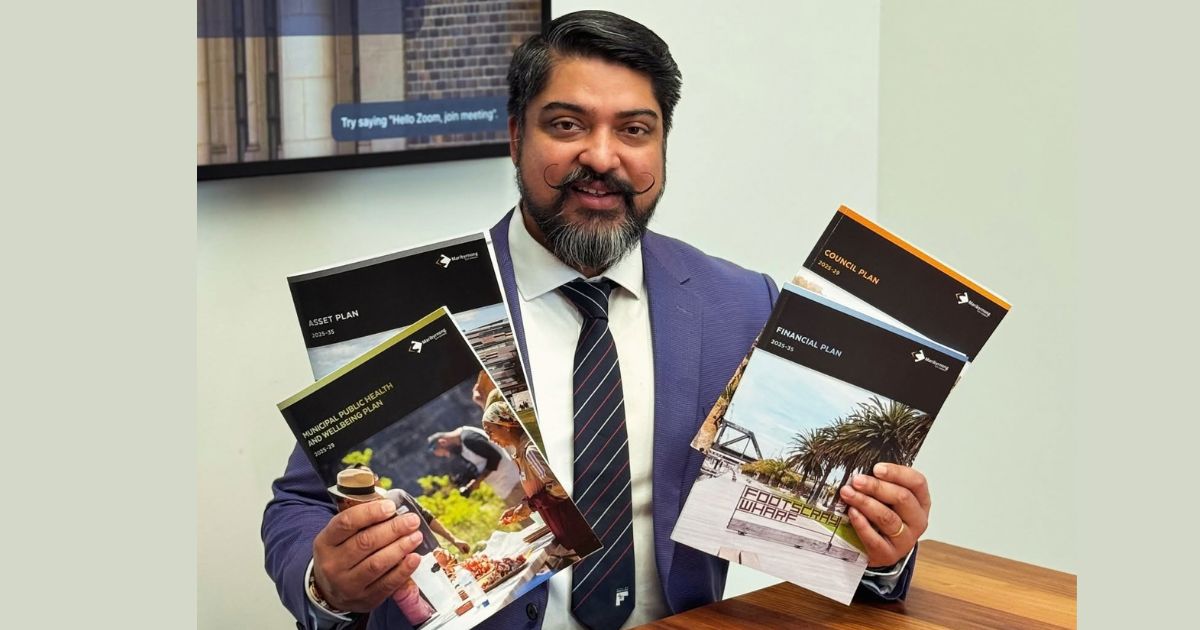
Pradeep Tiwari made history by becoming Victoria’s first mayor of Indian heritage. What matters to him now is ensuring he is not the last.
Long before Pradeep Tiwari entered council chambers, he was learning the fundamentals of public service from behind the counter of his family’s grocery store.
Tiwari arrived in Australia from India in 1985 at the age of two. Born in Varanasi, he traces his family’s roots to a remote village in the district of Deoria, where his parents came from a humble mud-brick home before building a new life in Melbourne.
Around 1990, they established Bharat Traders in West Footscray, one of Melbourne’s earliest Indian grocery businesses. For the young Tiwari, afternoons were spent watching his parents serve customers from across the world.
“It wasn’t just a grocery store. It was a community hub,” he recalls. “People would come in, share their stories and talk about what they missed from their countries.”
Those encounters introduced him to the hopes, struggles and cultural richness of migrant life. They also taught him how to listen, respond to frustrated customers and earn people’s trust, skills that would later become central to his political life.
Growing up in Melbourne’s west, Tiwari remembers diversity not as a political slogan but as an everyday reality. There may have been only one or two Indian students in his school, but his circle included families from European, Asian, African and Australian backgrounds.
“We celebrated our culture, Australian culture and everyone else’s culture,” he says. “We went to each other’s homes, our parents met and the children played together.”
His path into politics began not through party rooms, but through festivals, traders and local advocacy. As the founding leader of the West Footscray Traders Association for a decade, Tiwari helped organise community celebrations, including Holi and Diwali.
He soon discovered that these festivals belonged to more than one community. Residents of every background came to celebrate, forming relationships that extended well beyond the events themselves.
Yet each year, Tiwari found himself complaining about neglected roads, parks and inadequate council support. Eventually, residents challenged him to stop protesting from the outside and seek a place at the decision-making table.
“I realised I could keep complaining every year, or I could get into the system and try to change it.”
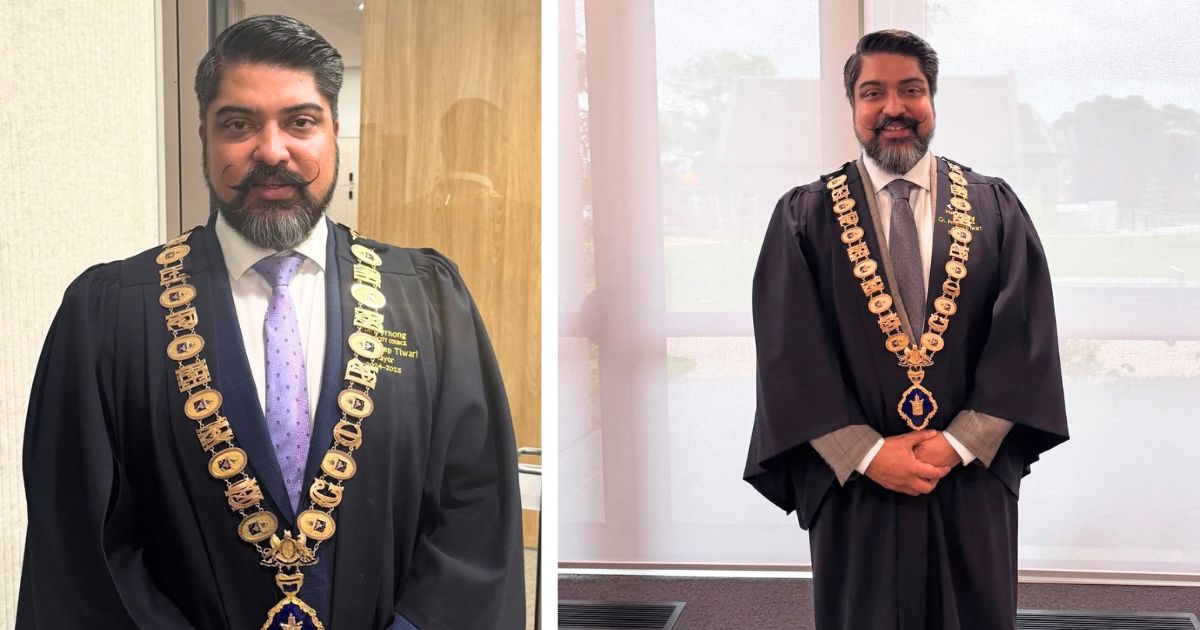
In 2024, he was elected to the City of Maribyrnong and, just seven days later, chosen as mayor. Standing on stage during his formal introduction, Tiwari learned that he had become Victoria’s first mayor of Indian heritage.
He had assumed that someone from Australia’s large Indian diaspora must have achieved the milestone before him. Pride quickly gave way to responsibility.
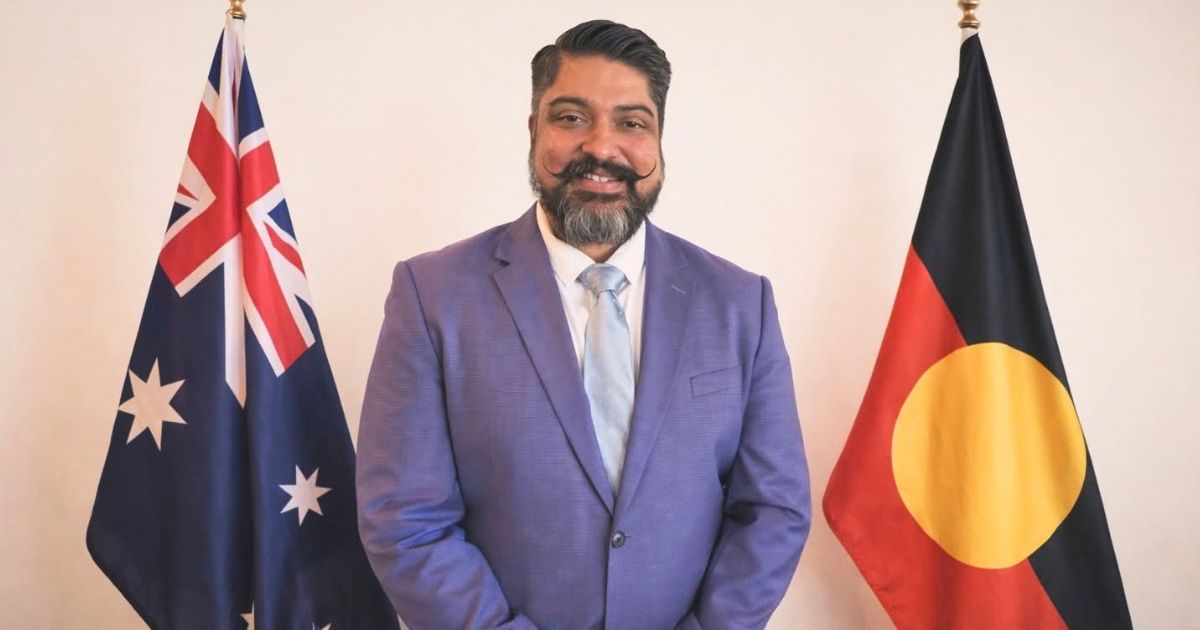
“I carry the broader Australian community on one shoulder and the Indian community on the other,” he says.
Public office, however, also exposed him to a harsher Australia. Tiwari says he encountered more racism after becoming a councillor and mayor than he had throughout his childhood.
Some questioned his right to lead because of his appearance or heritage. Online abuse intensified as national debates about migration became more hostile. But rather than withdrawing, Tiwari began answering his critics.
A conversation with an Indian student at RMIT University strengthened his resolve. The student told him that he had used Tiwari’s online responses to confront racist remarks directed at him.
“That was when I decided I wouldn’t remain silent,” Tiwari says. “We have contributed to this country, raised our families here and done the right thing. Why should we be afraid?”
His public life also faced a difficult test when a traffic matter prompted him to step aside temporarily as mayor. Tiwari says he wanted the matter resolved transparently and did not want his personal circumstances used to tarnish the broader Indian community. After approximately 40 to 45 days away, the court imposed a $400 traffic fine, and he returned to office.
The experience taught him that accountability is not about pretending leaders never make mistakes. It is about confronting them honestly, accepting the outcome and returning to the work.
And “getting things done” is how Tiwari hopes his tenure will be remembered.
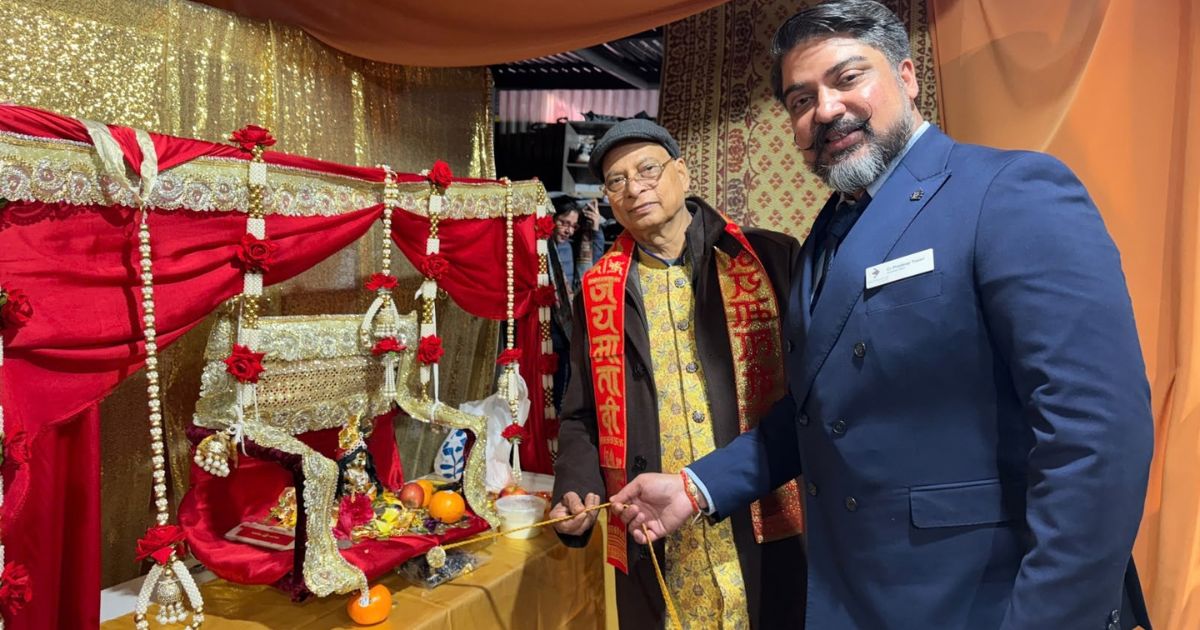
He points to long-delayed upgrades, including a park and cricket-ground project, works on Summerhill Road and progress on Maribyrnong’s aquatic facilities. West Footscray, he says, is receiving approximately $90 million in upgrades.
His most enduring cultural legacy may be the establishment of an annual Indian Independence Day flag-raising ceremony in Maribyrnong. Approved unanimously by council, the ceremony will continue regardless of whether Tiwari remains in office.
“If I didn’t advocate for something so meaningful to our community, who would?” he asks.
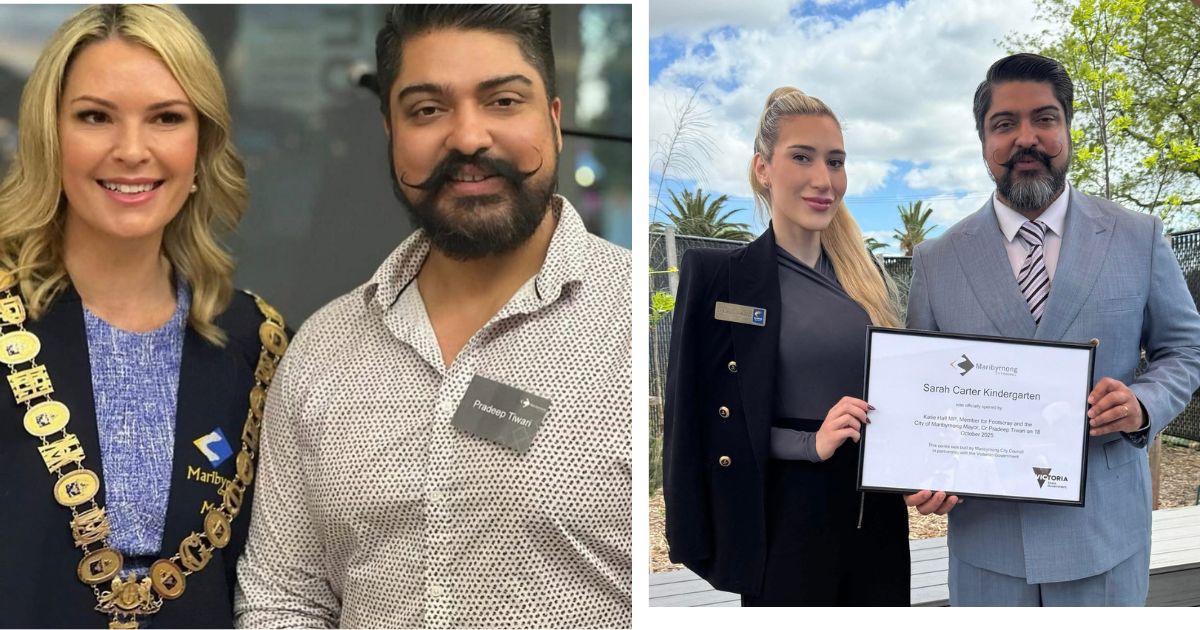
Behind his determination sits the influence of his late friend and mentor, former councillor and three-time mayor Sarah Carter. For years, Carter encouraged him to stand for council. She died in an accident shortly before the 2024 election, leaving Tiwari without the person who had guided his first steps into public life.
When he learned that he had won, Tiwari sent a message to her phone: “Sarah, I’ve done it for you.”
He still asks himself what Carter would do when difficult decisions arise.
As for the future, Tiwari makes no secret of his ambition to serve at state or federal level. For him, greater representation is not about collecting symbolic “firsts.” It is about ensuring multicultural Australians are present wherever decisions affecting their lives are made.
His message to Victoria’s Indian community is simple: work together.
“We are stronger together,” he says. “People do not yet realise how important this community is to the future of Victoria and Australia.”
From a migrant grocery store to the mayoral chamber, Tiwari’s story is ultimately not about a title. It is about refusing to accept that leadership belongs to somebody else.
He entered politics because he was tired of waiting for change. Now, he wants the next generation to see his journey and understand one thing:
The door is open. Walk through it, then hold it open for those coming behind you.
By Tonee Sethi
