


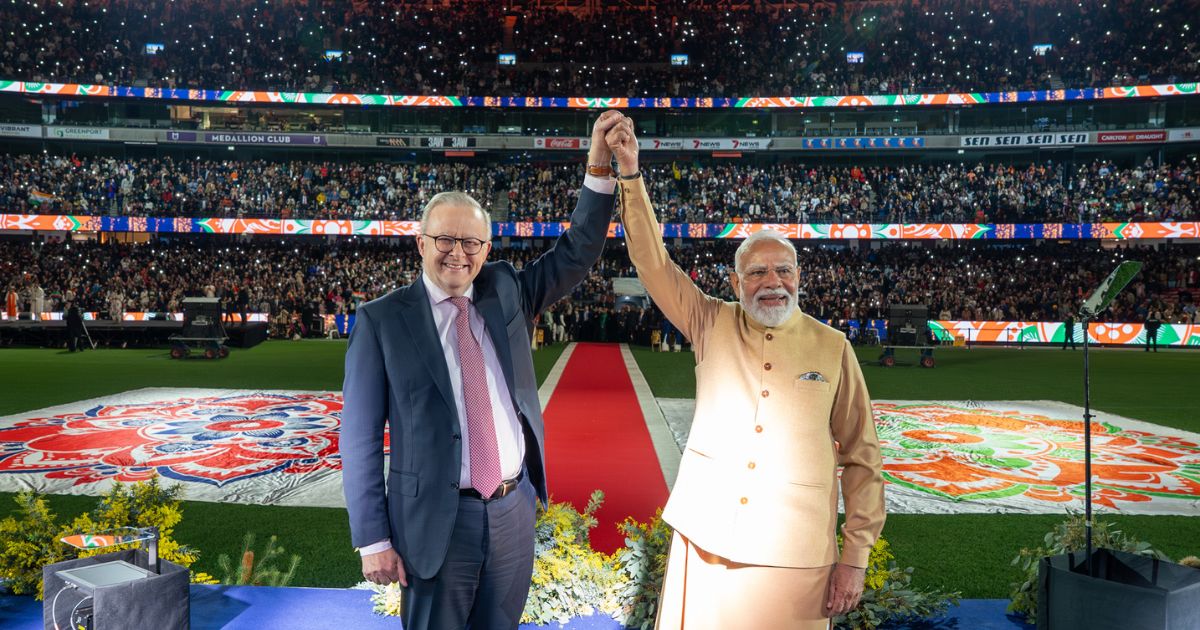
The three-day visit delivered 18 major outcomes across defence, energy, trade, technology, education and sport, significantly expanding the India–Australia Comprehensive Strategic Partnership.
Prime Minister Narendra Modi’s three-day visit to Australia from 8th to 10th July has marked a significant advance in relations between the two countries, producing 18 major outcomes spanning defence, maritime security, clean energy, investment, critical technologies, education, research, sport and cultural cooperation.
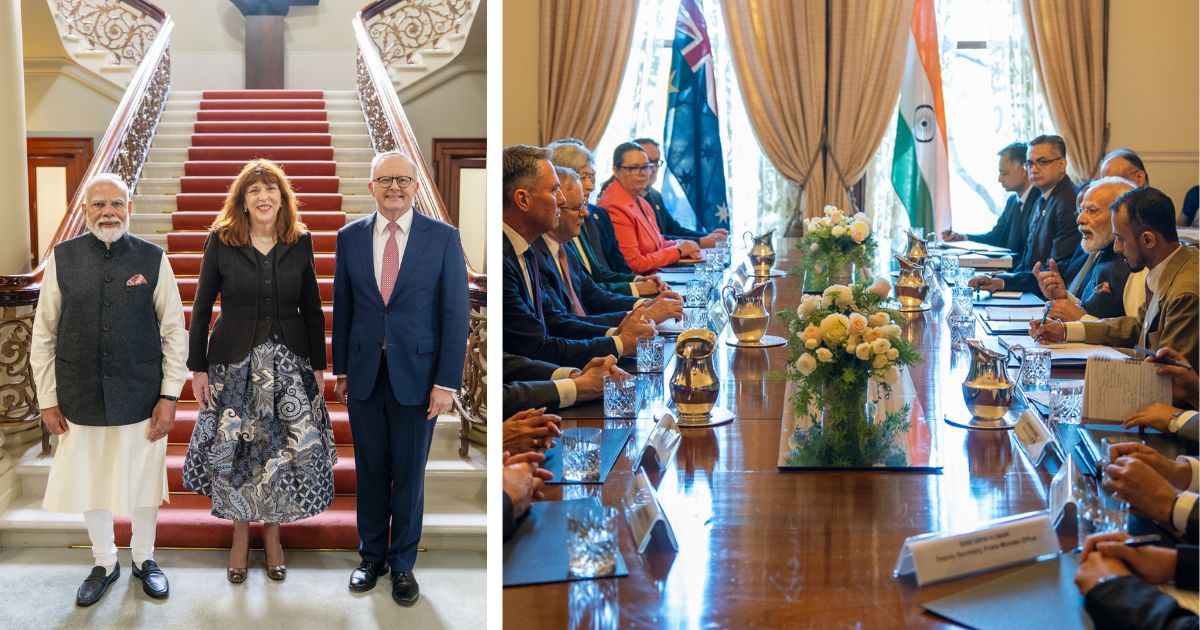
During the third Australia–India Annual Leaders’ Summit in Melbourne, Modi and Australian Prime Minister Anthony Albanese reaffirmed their commitment to the Comprehensive Strategic Partnership established in 2020. Their discussions focused on strengthening regional security, creating more resilient supply chains and developing new opportunities for economic and technological collaboration.
At the centre of the summit was a new Joint Declaration on Defence and Security Cooperation, replacing and substantially expanding the security framework adopted in 2009. The declaration commits India and Australia to increasing the complexity of joint military exercises, improving interoperability and information-sharing, expanding personnel exchanges and strengthening cooperation across land, sea, air, cyber and emerging technologies.
An Annual Defence Ministers’ Dialogue will also be established, while an India–Australia Defence Innovation Corridor will connect defence start-ups, industries and research institutions in both countries. Australia has additionally invited an Indian military instructor to serve at the Australian Defence College during 2028–29.
Maritime security emerged as another priority. A new Maritime Security Collaboration Roadmap will strengthen information-sharing, capability development and operational coordination, including search-and-rescue missions, pollution response and humanitarian assistance.
A separate memorandum between the Indian Coast Guard and Australia’s Maritime Border Command will support coastal surveillance, maritime law enforcement, border protection and greater awareness of activity across the Indo-Pacific. Both governments reiterated their support for a free, open, peaceful and prosperous region governed by international law.
One of the visit’s most consequential energy outcomes was the finalisation of administrative arrangements permitting Australia to export uranium to India under the 2015 Civil Nuclear Cooperation Agreement. Uranium will be used exclusively for peaceful purposes under International Atomic Energy Agency safeguards.
The agreement is expected to support India’s plans to increase nuclear power within its non-fossil-fuel energy mix while opening an additional market for Australia’s resources sector. The leaders also committed to maintaining reliable flows of liquefied natural gas, liquid fuels and downstream petroleum products and to expanding cooperation in renewable energy, green hydrogen and energy-storage technologies.
The launch of the Australia–India Partnership on Cyber, Critical Technologies and Supply Chains, known as PACTS, further broadened the strategic relationship. It will promote cooperation in cybersecurity, emerging technologies and resilient supply chains.
Geoscience Australia and the Geological Survey of India also signed an agreement on advanced mineral exploration. This initiative is intended to help establish a critical-minerals corridor capable of supporting clean-energy technologies and high-tech manufacturing in both countries.
In science and space cooperation, the leaders agreed to commission a temporary tracking terminal on the Cocos (Keeling) Islands to support India’s Gaganyaan human-spaceflight program. Further research initiatives include an agreement between India’s Council of Scientific and Industrial Research and the University of Melbourne, as well as cooperation under the Australia–Canada–India Technology and Innovation Partnership.
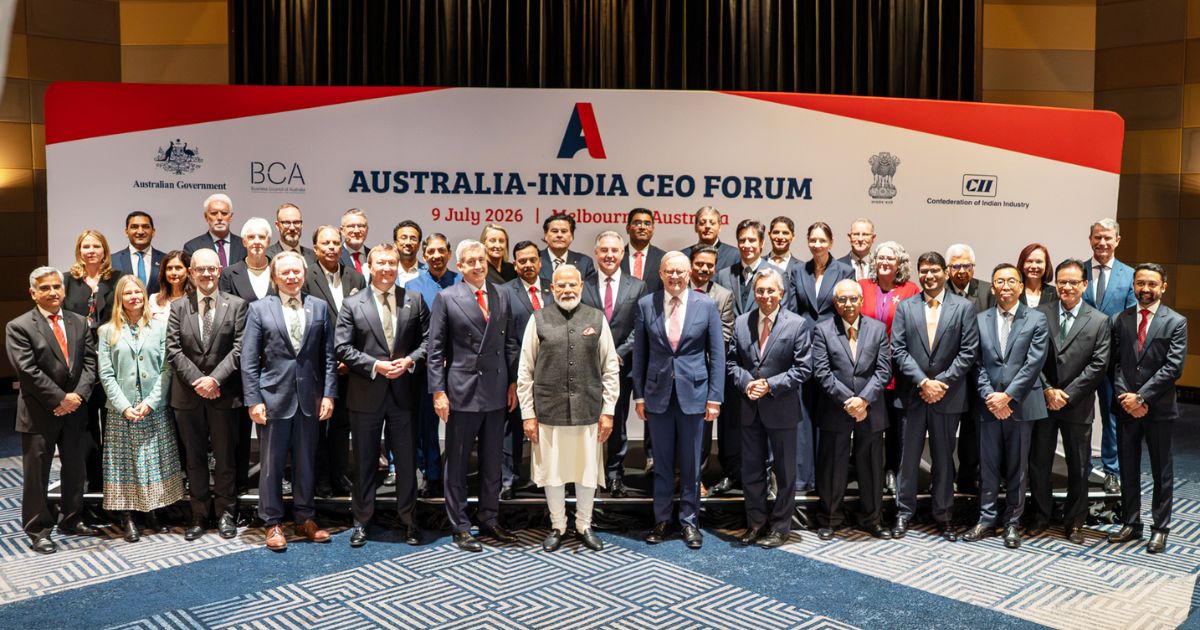
Economic engagement also gained momentum. Addressing the India–Australia CEO Forum and Economic Roadmap Business Reception, Modi invited Australian investors to participate in India’s infrastructure growth, including roads, railways and ports.
AustralianSuper subsequently announced an additional AUD 500 million investment in India’s National Investment and Infrastructure Fund. The commitment takes the superannuation fund’s total holdings across Indian asset classes to approximately AUD 3.3 billion, reflecting growing institutional confidence in India’s long-term economic prospects.
Both leaders also renewed their commitment to concluding an ambitious and balanced Comprehensive Economic Cooperation Agreement. The proposed agreement would build on the Economic Cooperation and Trade Agreement, which has already helped expand bilateral commerce. Total India–Australia trade reached USD 24.1 billion in the 2024–25 financial year, according to figures cited during the visit.
Education and skills development formed another substantial part of the outcomes. Flinders University signalled plans to establish a campus in Bengaluru, while Victoria University received approval to open a campus in Gurugram. Indian and Australian regulators will also cooperate on vocational education standards, quality assurance and workforce capacity-building.
A new Centre of Excellence in Mining and Mining Equipment, Technology and Services will be established at the National Skill Training Institute in Bhubaneswar. Meanwhile, a rooftop solar training academy in Gandhinagar has been operationalised with the aim of training 2,000 women and young people as solar technicians.
Film education was also included, through an agreement between India’s Satyajit Ray Film and Television Institute and Griffith Film School to encourage academic exchanges and creative collaboration.
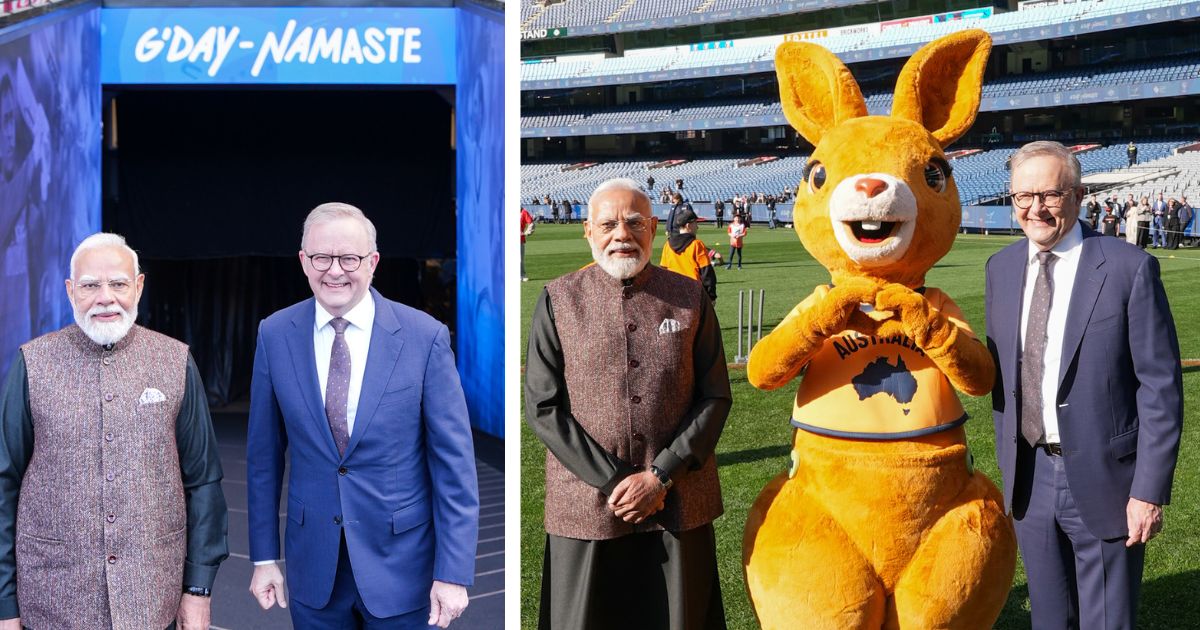
Beyond diplomacy and commerce, sport remained a powerful point of connection. Modi and Albanese visited the Melbourne Cricket Ground, where they met young athletes participating in cricket, kabaddi and Australian rules football. A Sport Cooperation Roadmap will promote institutional exchanges, coaching development, technical partnerships, infrastructure and youth engagement.
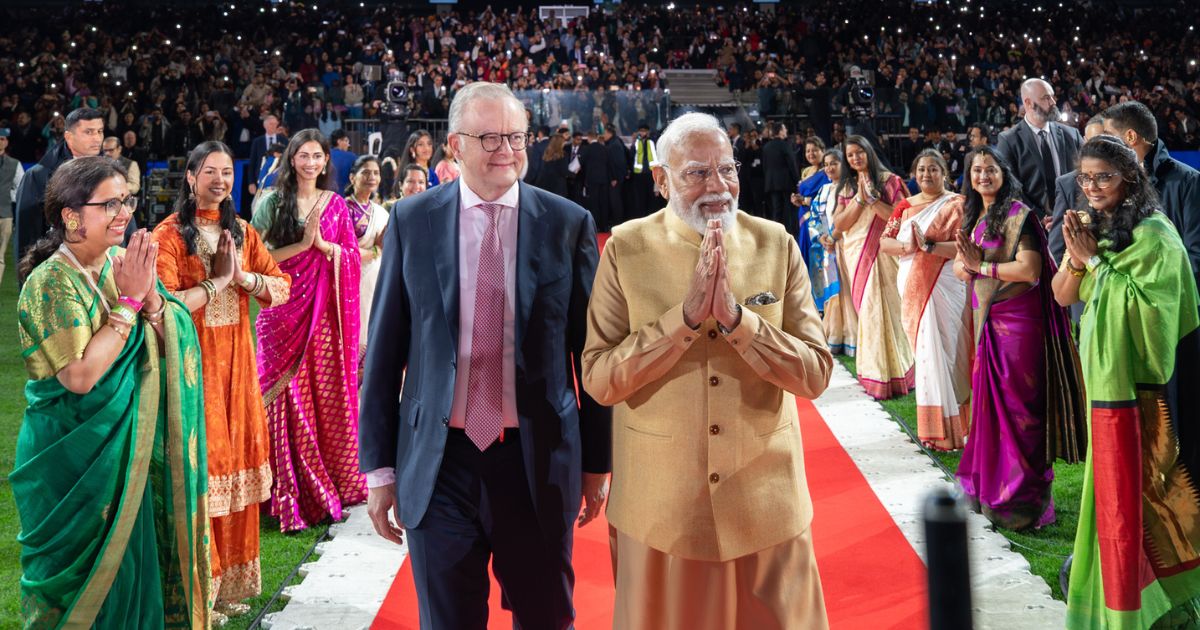
The visit also celebrated cultural and community ties. Australia announced the return of three Indian antiquities, while India agreed to repatriate an Australian First Nations ancestor held in Chennai. Addressing a large community gathering in Melbourne, Albanese described more than one million Australians of Indian heritage as the “living bridge” between the two nations.
Together, the agreements transform a relationship historically shaped by trade, education and cricket into a broader strategic partnership. As Modi departed Melbourne, he said the visit had opened new avenues for cooperation whose momentum would benefit not only India and Australia, but the wider region.
G’day India
